Object Narratives explicate religious images, objects, monuments, buildings, or spaces in 1500 words or less.

Object Narratives explicate religious images, objects, monuments, buildings, or spaces in 1500 words or less.
 Claiming Power in Polygamy: Augusta Joyce Crocheron's Representative Women of Deseret
Created at a moment when Latter-day Saints faced enormous public pressure to end the practice of polygamy, Representative Women of Deseret heralded the qualifications, accomplishments, and agency of Mormon women, countering prevailing stereotypes that rendered them as pitiable, deluded, or corrupted.
A special issue guest edited by Laura S. Levitt and Oren Baruch Stier
 Five Points of Entry: Judy Lachman's Group Photo from August 1942
Through war, ghettoization, deportations, and forced labor, Judy Lachman carried and protected from harm photographs of friends and family members, mementos of her life before and during World War II. One of these pictures depicts members of the youth Zionist organization Akiva. This article examines the photograph’s visual and material qualities, the transformations it underwent during the war, and its mediation and remediation after the war.
 The Missing Mezuzah
The mezuzah on a wall inside the United States Holocaust Memorial Museum, donated by Benjamin Meed, is the only object among the countless artifacts identified and displayed in the USHMM's Permanent Exhibition installed as if it is a useable object, i.e., without a display case and in the position of a ritually functional mezuzah. What is the place of such an object within the museum and what does it signify?
 “The book is small so it can be hidden”: Leia Kreimer’s Tiny Book from the Vapniarka Concentration Camp
During the Holocaust, even within the extreme conditions of life in concentration camps, people chose to keep and—in some cases—create objects that do not appear to fulfill essential human needs. Leia Kreimer’s tiny book, made for her as a gift, is one example. Its production, exchange, and ultimate survival illuminate the enduring resilience of the book as a cultural form that is both text and object.
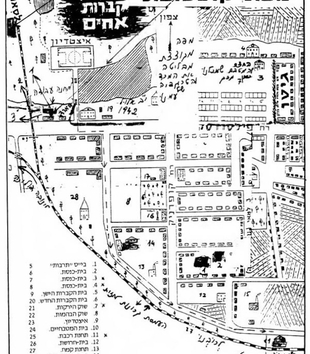 Maps as Artifacts of Remembrance: The Sefer Kostopol
Yizkher bukher, collaboratively authored memorial books devoted to single cities, can offer descendants of Holocaust survivors access to the places their ancestors were forced to flee. Jennifer Rich reflects on her encounter with Sefer Kostopol, the book written about her grandmother's hometown of Kostopol, Ukraine, and specifically the way maps in this and other yizkher bikher can help envision spaces now lost and destroyed.
A special issue curated by Kati Curts and Alex Kaloyanides
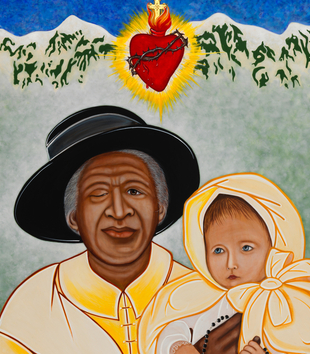 Julia Greeley, Denver’s Angel of Charity
More than a portrait of a holy person, an icon structures a present encounter with a saint and the community that the saint represents. What kind of encounter does Greeley’s icon conjure with race and Catholicism in the Old West?
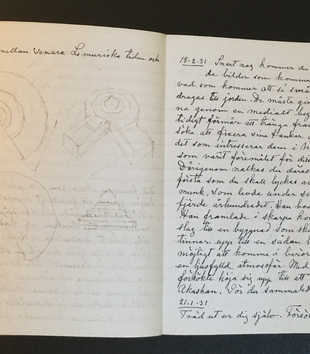 Hilma af Klint's Temple for the Paintings
Through Af Klint’s journal entries and sketches, we can shift analyses of sacred space from the guise of transcendent force that simply “appears,” in the phenomenological nomenclature, and instead approach it as technique.
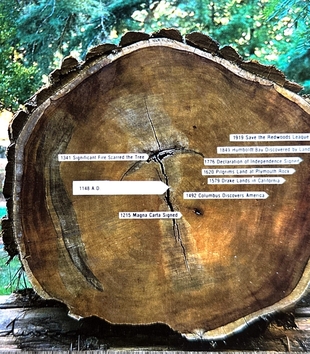 Tree Rings and Blood Lines
These redwood rings are both family trees and family circles, literally naturalizing a canonical “American” familial heritage insistently recited and instantiated in many media and locations: artistic and built environments, judicial practice, legislation and policy, textbooks, land use, and national land theory. Heritage is a family business.
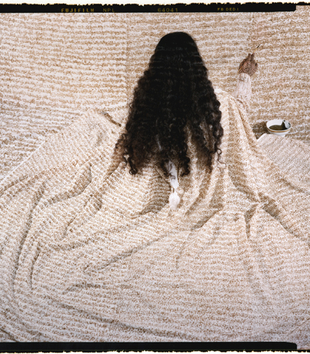 Corporealizing Moroccan Place
I wondered—how does a person become a place? A street, city quarter, mosque, or town could take the name of the wali interred there, like the cities of Sidi Slimane and Mawlay Idris. The sacred enters physical space through the body.
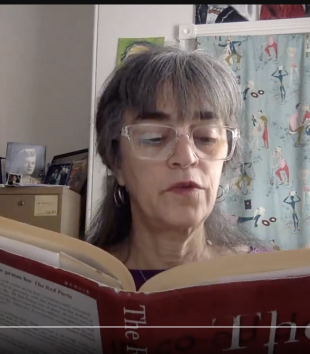 A Photograph in Words
In her memoir, The Red Parts, Maggie Nelson writes about the over-thirty-year-old unsolved murder of her aunt, Jane Mixer, a case brought back to life in a Michigan court room. Who gets to tell this story? How should it be told?
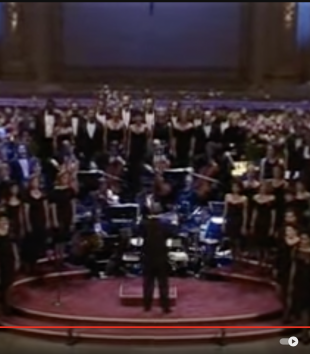 Pausing on a Sunday: What Kind of Secular is the American Musical?
The musical in which this song appears includes archetypal depictions of the modern artist and his attendant gendered capacities and failures. Sondheim would point out: its lyric is a single sentence; it is a description of a process; it includes a word, “forever,” that he observes makes him cry.
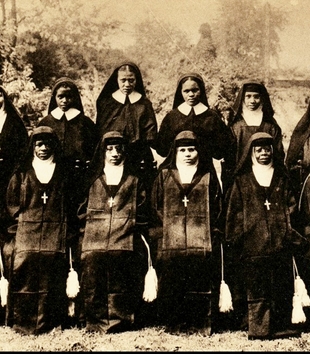 “Colored Magdalens,” House of the Good Shepherd for Colored Girls, Baltimore, ca. 1930s
Was [the Magdalens'] decision to own in perpetuity the status of penitent a judgment on waywardness, or a benediction? An internalization of white surveillance, or its repudiation?
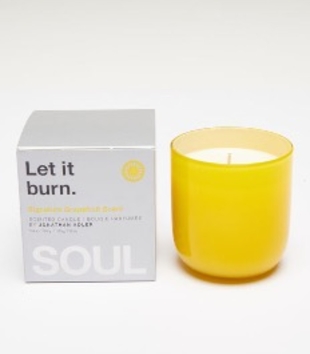 Let. It. Burn. SoulCycle's Jonathan Adler Grapefruit Scented Candle
While a stationary bike is the main conduit for the SoulCycle experience, perhaps no object plays a greater role in facilitating SoulCycle’s choreography of emotion than the brand’s signature grapefruit-scented candle.
 The Sticky Cookies of Biblical Womanhood
Biblical womanhood blogs often resemble the idealized Christian home they encourage women to build. Businesses have long recognized the potential for profit in networked domesticity, enticing bloggers to participate in commercial enterprise by promising percentages of purchase costs made through their sites.
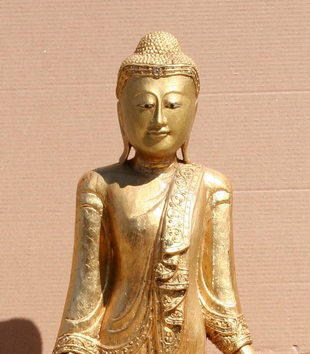 eBay Buddha
This golden Buddha, which has a striking resemblance to a Burmese Buddha in the British Museum, came up for sale on eBay for the sum of $5,000.00. The material of teak, the economies of the British and Burmese empires, the religion then being named "Buddhism," now give us this American eBay Buddha.
 Wifey
Wifey
The fragrance Wifey by KKW Fragrances was released in 2019. As wife to black artist Ye (formerly Kanye West), Kim KW claimed and sold the role of wifey. The “wifey” is not simply a wife. She is a model or caricature of a wife, a down-ass. The “wifey” signifies a new ideal in our contemporary popular culture.
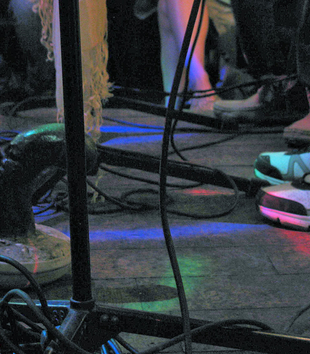 Making Paths with Stone
Eshu-Elegguá is a divinity in the Regla de Ocha-Ifá pantheon characterized as a warrior and messenger. Enslaved Africans in Cuba taught their descendants that a good relationship with this divinity is helpful for making risky choices and providing protection when embarking on a treacherous new beginning.
 Fuel for the Soul
The bible "God's Word for the Oil Patch: Fuel for the Soul" offers insight into how people theorise both the value of energy and the kind of lives people need to live to access this value. The publication implies that to have the kind of soul that lives a good life, you need to manage oil and its energy: souls are things that need fuel, be it "God's word" or oil itself. Oil work, in this context, becomes soul work.
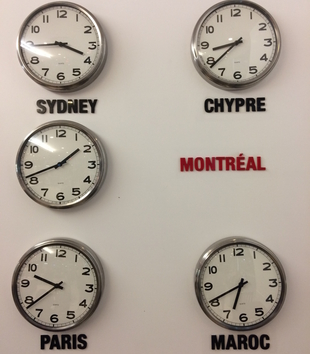 Bus Station Clocks
A row of clocks. Each one with an identical, nondescript face—except for the hands, which are conspicuous in their different orientations. Clocks are the kind of “religion” that spills out beyond the sphere of the sacred. Rows of clocks that evoke utopian, aspirational feelings of global connectedness. These are “religious” feelings in the deepest sense of the term.
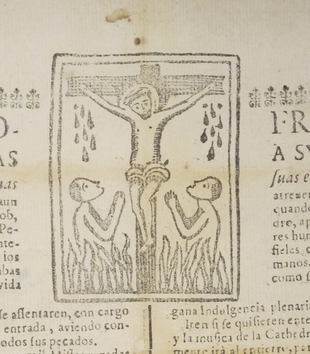 Confraternal Letter
A simple woodcut on a late-seventeenth-century membership letter of the confraternity of Souls of the Cathedral of Lima depicts two souls bathed in flames, gazing up at Christ crucified. Stylized drops of blood pour from each of Christ’s wounded hands, visual embodiments of the doctrinal logic behind indulgences—the great sacrifice of Christ and of the martyrs of the church created a treasury of merit that ordinary sinners could draw upon.
 Wudhu Socks
This is a pair of highly engineered, durable waterproof socks that exemplifies the rebranding of sportswear for the American Muslim market. Marketed as “wudhu socks,” the socks protect the feet and ankles from ritual impurities, and are intended to allow one not to wash one’s feet between ablutions.
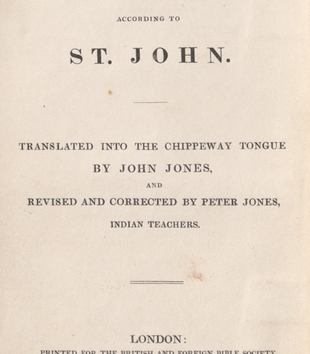 Biblical Gifts & Colonial Relations
On April 5, 1832, Peter Jones presented King William IV with a bible he translated into Anishinaabemowin. This exchange reflects Anishinaabe gift-giving practices, in which bible gifts can be regarded as practices used to build and refuse particular religious, political, and material relations.
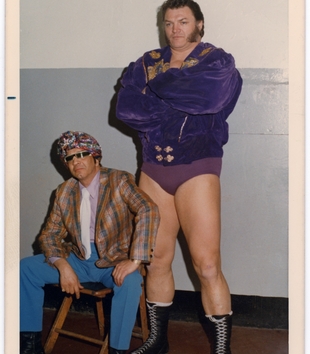 The Mormon Heel
Don Leo Jonathan was born 1931 to a Mormon family in Utah. During his professional wrestling career, Don Leo capitalized on certain anti-Mormon prejudices during a period of Mormonism’s erstwhile mainstreaming and clean-cut imagination in American culture, often performing as the "heel," or villain.
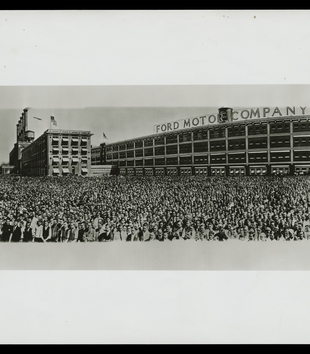 Relics and Rubber
In 1929, Henry Ford opened the Henry Ford Museum. That same year Ford Motor Company set ablaze vast swaths of rainforest in Brazil to clear land for Fordlandia, one of Ford’s rubber plantations. In Ford’s “progressive” trail across the Americas and in pictured masses arrayed outside Ford’s plants, we glimpse material economies of religion christened as political economy and mass produced in Ford’s name.