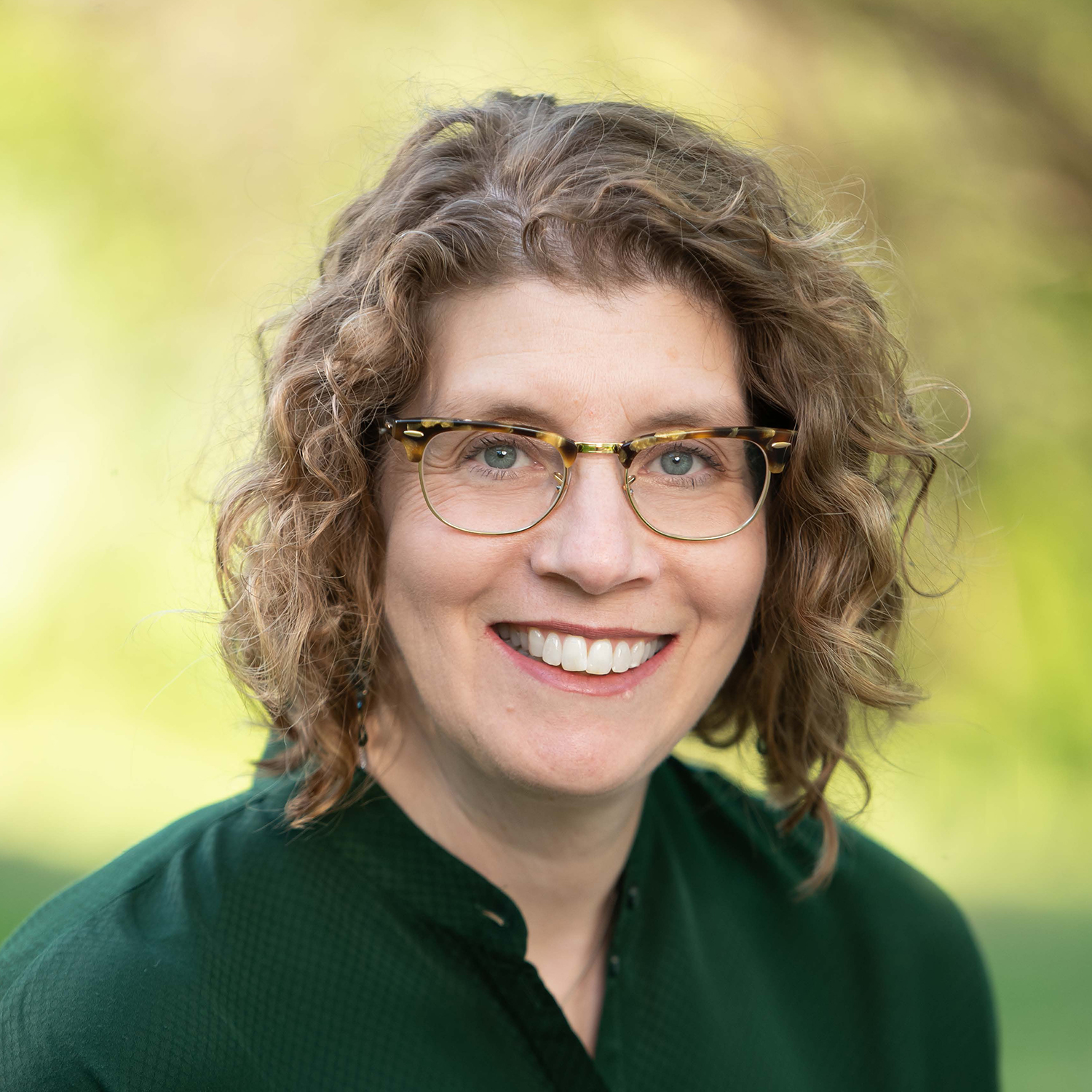
For over 30 years, Susan Goldstein Snyder was an acquisitions curator at the United States Holocaust Memorial Museum, retiring in 2024. One of the first collections she acquired was donated by Beatrice "Trixie" Muchman who survived in hiding in Belgium. Throughout Susan's tenure at the USHMM, she would meet almost yearly with Trixie who continues to be actively involved and supportive of the USHMM. Susan and Trixie remain friends to this day.
In Memory of Beatrice (Trixie) Muchman*
On March 15, 2024, Suzy Snyder interviewed Beatrice Muchman over Zoom. The transcript of their conversation has been edited for readability.
Suzy Snyder: So, the reason that I'm asking you to join me in this Zoom is because we are very interested in your story of when you were in hiding. You received communion, correct?”
Beatrice Muchman: And baptism.
Suzy Snyder: Can you tell me a little bit about what that was like?
Beatrice Muchman: Well, you know, as a child, it was like a mother savior. You know I just found out this whole thing about Pope Pius, and I realized that as a little girl, these people were really bucking the program, right?1 I didn't know a thing about it. The Baptism was all so exciting because in my life, you know, Judaism is Judaism. It's very down to earth. This is—these gorgeous statues and it's like a myth. And I fell right into it, I mean, I was at the right age for that. So the baptism was, oh my God, I mean, it would remind me of being part of a sorority where you look in these mirrors and they put water on your head and then you're, of course, born again. So they told me. And I bought it all and my first communion might have been—you know, I wanted to be a movie star before this, but by my first communion I had sort of decided that being a Carmelite nun of the non-speaking order might be really a very cool idea. At my first communion, everything was borrowed. And I'm sure that I thought I was some kind of a princess. That are childhood memories, right? But it isn't so easy to just let go of all that. So the fortunate thing was that when I went to tell the parish priest, my new idea of not being Shirley Temple and being a Carmelite nun of the non-speaking order, how fortunate was I that he decided you can't do this right now. So, when you grow up, you can be anything you want to be, but right now, you just—you were born Jewish. How often does that happen? And it's my understanding that it doesn't happen often.
Suzy Snyder: That's correct, I think.
Beatrice Muchman: Yeah, and mostly children stayed behind. And we're not—you know, the memories I have—I am sure, oh, God, I must have been scared. I must have been lonely. But, you know, as memories are so subjective and we choose what we want to remember, I'm sure that I've let the trauma go. Those two years, and of course, how kind were these women? How normal? You know, if you did something wrong, then you got punished, and if you did something right, you were praised. And they were very—not they, actually, my godmother was the one who was the most influential. But my experience during those years was just the way you would hit a seven, eight-year-old child. And, I mean—I know that, more than anything, I wanted to live and I wanted to be happy. I mean, there's some guilt associated with that. You know, what would my mother think? My mother sewed these beautiful things and here I am with a borrowed white dress, but I must have gotten over it. And those memories haven't really changed. I mean, obviously, I've grown old. And I realize what you can do with children. You can certainly influence them to the core. But, you know, the freedom. You know, a friend of mine who is Roman Catholic said to me, “you know, they were integrating all this in you, while thousands and thousands of people were murdered. And here you felt guilty about murdering a rabbit.”2
Suzy Snyder: What did you say to her when she said that?
Beatrice Muchman: I said, you're right.
Suzy Snyder: But you didn't know that at the time.
Beatrice Muchman: No, no, no, of course not. But she, as a Catholic, realized the art of any religion—obviously, in her case, Roman Catholic—how you can influence children forever and keep them in your fold.
Suzy Snyder: Of course. You said your godmother—you had influence from your godmother, correct?
Beatrice Muchman: Oh, a tremendous . . .
Suzy Snyder: And is this Marraine?
Beatrice Muchman: Yes. I think the person that I am today—and I've had so many mothers—but the person that I am today—she was mostly responsible for that, and I loved her, I didn't understand that she was she was bucking the system, I didn't quite get that, but I did know that if Nazis came to town, we were allowed to go hide in the forest, which I thought was some immense forest until I saw it. And we played all night, Hansel and Gretel. I mean, this [is] incomprehensible, but it happened. It happened.
Suzy Snyder: So when you . . .
Beatrice Muchman: It took a long time. I—for a long time, I couldn't really walk into a church without being touched.
Suzy Snyder: So you were moved. You were very moved by the pageantry, the religiosity of Catholicism.
Beatrice Muchman: Oh. The Virgin Mary. I mean, I see this—what I thought was a very big church, which ended up being a very small church, but I can see myself walking in and believing in all these figures.
Suzy Snyder: When you received communion, you showed me both a rosary and a missile that you still have in your possession. Who gave you . . . ?
Beatrice Muchman: Since I am telling everybody to give everything to the museum. I have displaced that rosary.
Suzy Snyder: Okay. They’ll find it. Don't worry.
Beatrice Muchman: That I don't know. I don't know. But it's small and very old. And it was given to me with a little Bible by Marainne and—with a little note, and I mean, I didn't realize that Pope Pius II was responsible for the Hail Marys.3 They didn't exist before him. Who would have known this? I mean, it's just not me. I knew my Hail Marys, and I could probably still recite them in French.
Suzy Snyder: And tell me about, I mean, this is really the thing that I wanted to ask you about, these two things that are so important in Catholicism to people who worship and you saved them. You kept them. You showed them to me. And you've hung on to them. Now, I'm asking you this not because why have you not donated them? I mean, that is a question. But also, it's not a question as if I am demanding it, but I wonder why of all the things that you've donated, these are the two things you're holding on to and what they mean to you.
Beatrice Muchman: So, you know the trouble—remember that I wanted you to come and get everything now. Why did I hang on to it? Partially superstition, partially just the one thing that was very dear and very personal. But I did want you to come.
Suzy Snyder: Right, we've talked about that fairly recently but I saw you probably six or seven months ago and you did show me the missile and it had some cards in it of saints. And on the back, they were autographed or filled out, signed with your false name. Am I correct? Am I remembering that correctly?
Beatrice Muchman: I've not even looked at it since.
Suzy Snyder: It didn't. I'm not questioning why you keep it, and I wonder if I can just ask you, if you don't mind talking a little bit about what you mean about perhaps superstition has kept you from donating. Superstition from what? And do you feel comfortable telling me?
Beatrice Muchman: Oh, I would feel totally comfortable telling you if I understood it. If I understood it. You know, I mean, as mortality is closer and closer, do we really know where we're going? Do we know what's happening? Or, you know, maybe that's something I was thinking about. Maybe. I don't know. I don't know. I think those were the two most precious things. And then lo and behold, I misplaced the rosary. And that really taught me a lesson. Because I just got through in Florida telling everybody, give it all away. And then I misplaced the rosary.
Suzy Snyder: Well, I . . .
Beatrice Muchman: A Roman Catholic friend gave me one of hers, and I said, “well, don't you use that?” She said, “Oh heavens, no.” Okay.
Suzy Snyder: Well, I do have to say that it isn't uncommon to pull things out and then put things away again and not remember where they go. That happens a lot. So don't worry.
Beatrice Muchman: That's a problem.
Suzy Snyder: It's not—you're not the only one this happens to. This is a very common refrain when I meet with people and they tell me that they have a stack of letters and they don't know what they did with the stack of letters. But going back, I just have a few more questions. Going back to when you were—when you observed your communion, you observed it with—and I'm only repeating this because for anyone who watches this that doesn't know the backstory—that you were also in hiding with Henri, your cousin, and you observed communion with Henri. We have a picture of both of you with the priest.
Beatrice Muchman: And he was going to be a choir boy.
Suzy Snyder: Well, that's what I was about to ask. What was Henri's feeling?
Beatrice Muchman: He was going to be a choir boy, and now he's absolutely—he’s a scientist. He has no religion whatsoever. He just—I don't even know how much Judaism means to him. I don't think anything other than that he's Jewish, but religiously, he's done. Am I done? I'm probably questioning religion. I don't know. I mean, could there possibly be a God and all this is going on around us? I don't know. I mean, there must be answers in the energy of the world but far be it for me to understand it. Too many bad things are happening.
Suzy Snyder: Do you and Henri talk about that time period?
Beatrice Muchman: Yes. We talk reasonable, right? His wife is pretty sick, but we do. In fact, we talk a lot. And, you know, his opinion is—and this is not great for his children, of course—he thinks we went through the worst things, they made us stronger. It made us better, and personally, because we were children, I don't quite agree with him. I think he has two daughters who are incredibly, wonderfully involved in the world we live in. And I think that's just putting a lot of guilt on those kids, but—who aren't such kids anymore, they have their own children—but he's, he's convinced. I mean, that we went through the worst things, and it made us stronger. And I don't know. I think we were probably the same people before that we were after. I don't think—I think the Holocaust was one of those terrible, terrible events, but I'm shocked now when I speak that [the current] generation really thinks the Holocaust was a myth. You know that better than me. And so, you know, we can't really let go of it, but we have to learn how to integrate it in the world that they live in too, because their world is not beautiful—not at this moment. There's just—it’s a terrible world.
Suzy Snyder: I would agree with that. I would agree with that. I would agree that we're living in a very dark world right now.
Beatrice Muchman: Very, very dark times.
Suzy Snyder: I just have a couple of more questions. My first question is back to the missal. Does your daughter, Wendy, know about the missal? Has she seen it? What does she think?
Beatrice Muchman: The missal?
Suzy Snyder: The prayer book with the . . .
Beatrice Muchman: Oh, Wendy from the very beginning thought it should all be given up.
Suzy Snyder: She's not attached to it in any way.
Beatrice Muchman: Not. She's not. I mean, she feels exactly—the very thing that happened. I misplaced the rosary. So, you know, Wendy from the very beginning wanted me to give this up. She's perfectly fine with that.
Suzy Snyder: Okay, and this has nothing to do with why I'm calling you, but I'm just curious. Henri—you and Henri, you separated. You went to the United States. Henri stayed in Belgium. And I guess my question is, were you missing Henri? Was that hard for you? Was it hard to say goodbye to him?
Beatrice Muchman: Yes. I mean, it was a difficult parting. And then it got to a point where it was almost complete for a while. And then we just got together again. Now, the thing was that when I was adopted, [there was] the whole idea of we don't talk about the Holocaust. It was bad in the United States. We had butter rations. That probably did do me a favor because I did throw myself into becoming an American. Whereas he, of course, stayed behind and lived the experience for a long time because he kept going back to the village—this is actually where he lived and went to university. So he would travel daily because his mother was in Germany. And then when we reunited, it was—oh God—it was years later. I would say it was the 50s. And when we reunited, then, you know, it all came spilling out. And from that point on, we've talked about it a lot. We do have different opinions about it, but . . .
Suzy Snyder: Are you sorry that you couldn't stay with Henri?
Beatrice Muchman: No.
Suzy Snyder: In retrospect you're okay with that?
Beatrice Muchman: In retrospect I so wanted to come to America.
Suzy Snyder: You did.
Beatrice Muchman: I mean, I always knew that. No. And seeing the Statue of Liberty—how sad now—but it was just, I didn't even realize that the reason that I had lost everybody was because the Statue of Liberty was really not quite what it was supposed to be. But it was such a thrilling time.
*This article is dedicated to the memory of Beatrice (Trixie) Muchman, who passed away on 28 April 2025 at the age of 91. She was an inspiration to all who knew her and will be dearly missed. We are honored to have had the opportunity to work with her and share her story.
Click here for the Essay that accompanies this Conversation.
- 1David Kertzer documented cases in which Pope Pius XII supported the church’s attempts to prevent Jewish children from being reinstated with their families if they had been baptized while in hiding during the Holocaust. David I. Kertzer, “The Pope, the Jews, and the Secrets in the Archives,” The Atlantic (2020, August 27), accessed March 25, 2025, see here.
- 2“Occasionally one of the birds would have the misfortune of serving as our dinner; this same fate also befell the cutest of rabbits. At a time when the outside world was overrun with unspeakable horror and catastrophe, we had the luxury of wallowing in distaste at the idea of killing for our supper.” Beatrice Muchman, Never to be Forgotten: A Young Girl’s Holocaust Memoir (eBookIt.com, 2016), 66.
- 3The Hail Mary actually dates back to approximately 1050 CE. Herbert Thurston, "Hail Mary," The Catholic Encyclopedia, vol. 7 (New York: Robert Appleton Company, 1910), accessed on March 25, 2025, see here.
About the Author
Notes
Keywords
Imprint
Author
Interviewed by Suzy Snyder
Year
2025
Type
Conversations
Volume
Volume 9: Issue 2 Tending to Holocaust Objects: Interrogating the Sacred
Copyright
©
Interviewed by Suzy Snyder
Licensing
Downloads
PDF
DOI
10.22332/mav.con.2025.2
Citation Guide
1. Suzy Snyder, “A Conversation with Holocaust Survivor Beatrice Muchmann,” Conversation, MAVCOR Journal 9, no. 2 (2025), 10.22332/mav.con.2025.2.
Snyder, Suzy. “A Conversation with Holocaust Survivor Beatrice Muchmann.” Conversation. MAVCOR Journal 9, no. 2 (2025), 10.22332/mav.con.2025.2.